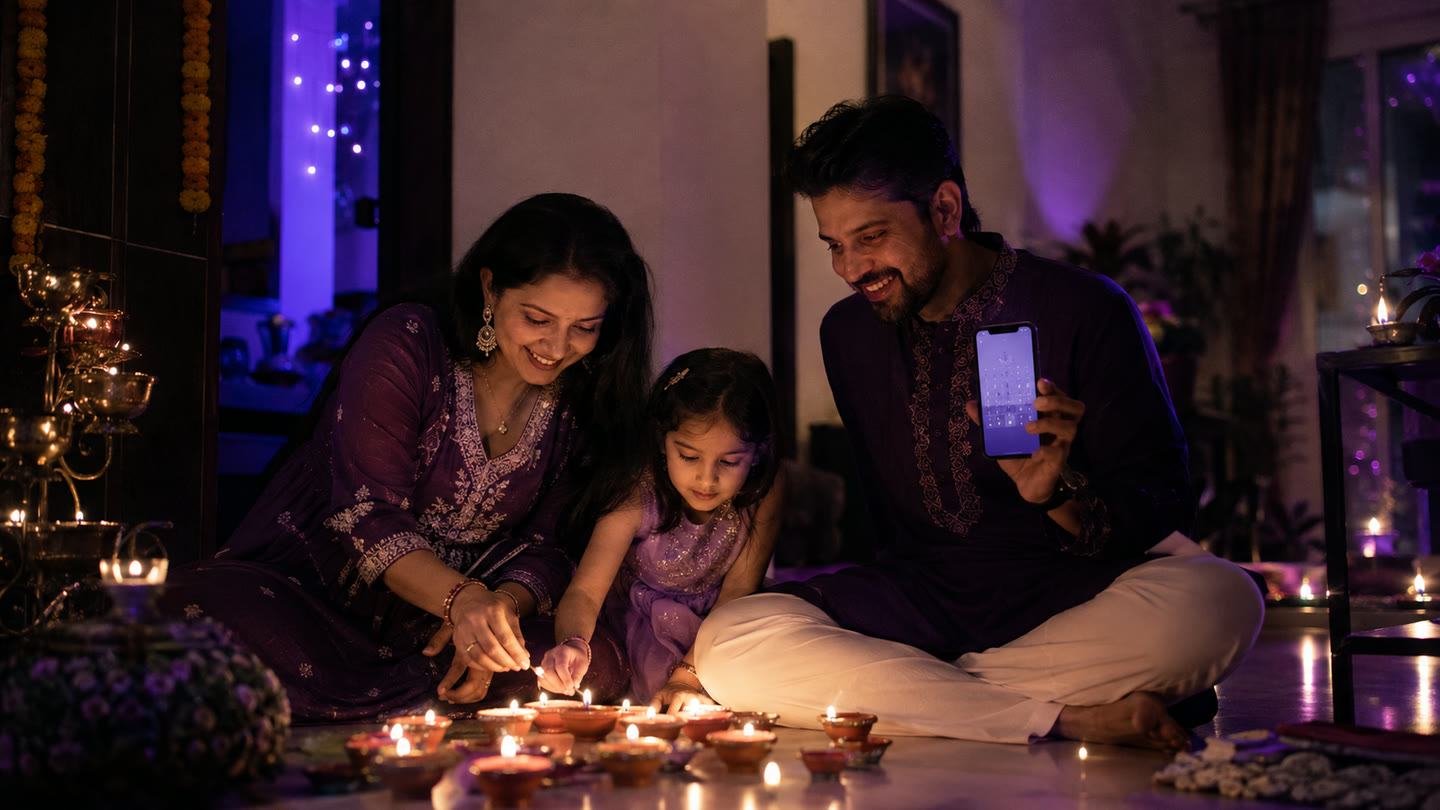
Sharad Navratri 2026

शरद नवरात्रि

Nine nights of Durga worship — autumn Navratri guide, date, muhurat & puja vidhi

Last updated: 2026-06-22

Quick Information

Month

September-October

Duration

9 Days

Calendar

Lunar

Deity

Durga

About Sharad Navratri

Sharad Navratri (शरद नवरात्रि) is one of the most widely celebrated festivals in the Hindu calendar — nine nights and ten days devoted to the worship of the Divine Mother, Goddess Durga. The word Navratri literally means "nine nights" (nava = nine, ratri = night), and Sharad refers to the autumn season in which it falls. It is celebrated in the bright fortnight (Shukla Paksha) of the Hindu month of Ashwin, usually corresponding to September-October in the Gregorian calendar.

This festival is dedicated to Durga in her nine forms and follows the Lunar calendar tradition. It is observed over 9 days, beginning on Pratipada (the first tithi) and concluding on the tenth day with Vijayadashami, also known as Dussehra. Because dates are determined by the moon's position rather than the solar calendar, the exact Gregorian dates shift slightly from year to year. For the precise tithi-based dates and timings for your city, you can cross-check our panchang.

Across India, Sharad Navratri carries many regional flavours — from the grand Garba and Dandiya nights of Gujarat to the elaborate Durga Puja pandals of West Bengal and the Golu doll displays of the South. Underlying all of these is a single shared theme: the celebration of shakti, the feminine cosmic energy that sustains creation, and the victory of righteousness over evil.

History & Significance

The most well-known story behind Navratri is the goddess Durga's battle with the buffalo-demon Mahishasura. According to tradition, Mahishasura had earned a boon making him nearly invincible to gods and men. To defeat him, the combined energies of the deities took form as Durga, who fought the demon for nine nights and slew him on the tenth day. This is why the tenth day is celebrated as Vijayadashami — the "victory of the tenth" — symbolising the triumph of good over evil and dharma over adharma.

Navratri is also closely linked to the epic Ramayana. In many traditions, Lord Rama is said to have worshipped Durga before his battle with Ravana, and Dussehra marks his eventual victory. In North India, this is why Vijayadashami often coincides with the burning of effigies of Ravana, celebrating the return of righteousness.

Beyond the mythology, Navratri marks a seasonal turning point. Falling at the junction of two seasons, it is traditionally regarded as a time for the body and mind to reset — through lighter sattvic food, fasting, prayer, and reflection. For devotees, the nine nights are an opportunity to draw closer to the Divine Mother and to renew positive intentions for the year ahead.

The Nine Forms of Durga (Navadurga)

Each of the nine days of Sharad Navratri is dedicated to a distinct form of the goddess, collectively known as the Navadurga. Many devotees also associate a colour with each day; colours and their order can vary by region and almanac, so treat the table below as a widely-followed guide rather than a fixed rule.

DayForm of DurgaRepresents
Day 1ShailaputriDaughter of the mountains; rootedness and beginnings
Day 2BrahmachariniDevotion, penance, and disciplined practice
Day 3ChandraghantaCourage and protection
Day 4KushmandaCosmic energy and vitality
Day 5SkandamataMotherly care and nurturing
Day 6KatyayaniStrength and the warrior aspect
Day 7KalaratriRemoval of fear and negativity
Day 8MahagauriPurity and peace
Day 9SiddhidatriSpiritual attainment and fulfilment

The eighth day (Ashtami) and ninth day (Navami) are considered especially important, and many families perform Kanya Pujan and special homas on these days.

Muhurat & Timings

The auspicious timings for Sharad Navratri puja vary each year based on planetary positions. For accurate muhurat timings:

Rituals & Traditions

The key rituals performed during Sharad Navratri include:

Fasting Garba Durga puja Kanya puja

How to Celebrate

  • Fasting (Vrat): Many devotees keep a partial or full fast for all nine days, eating only sattvic, vrat-friendly food and avoiding grains, onion, garlic, and non-vegetarian meals.
  • Garba & Dandiya: Energetic folk dances performed in circles around an image or lamp of the goddess, especially vibrant in Gujarat and among Gujarati communities everywhere.
  • Durga Puja: Daily worship of the goddess, recitation of the Durga Saptashati (Devi Mahatmya), and in Bengal the installation of elaborate community pandals.
  • Kanya Pujan: Worship of young girls as living embodiments of the goddess, typically on Ashtami or Navami, who are offered food, gifts, and respect.

Step-by-Step Puja Vidhi

While customs differ from household to household, a traditional home celebration generally follows these steps. Adapt them to your family's lineage and your priest's guidance.

  1. Clean and prepare the space: On the morning of Pratipada, clean the puja area and set up a low platform (chowki) for the goddess's image or photo.
  2. Ghatasthapana / Kalash Sthapana: During the auspicious morning window, place a kalash (pot) filled with water, sometimes sown with barley grains in soil, topped with a coconut wrapped in cloth. This invokes the goddess for the nine days.
  3. Sankalp (intention): Take a vow of the observance — the fasting and worship you intend to keep for the nine days.
  4. Invocation and offerings: Light a lamp (akhand jyoti where observed), offer flowers, incense, fruits, and prepared bhog. Apply tilak and offer red flowers, which are dear to the goddess.
  5. Daily worship: Each day, worship the corresponding form of Durga, chant her mantra, and where possible read a portion of the Durga Saptashati or Durga Chalisa.
  6. Ashtami / Navami special rites: Perform Kanya Pujan and, in many homes, a havan (fire offering) to conclude the worship.
  7. Aarti and Visarjan: End each session with the Durga aarti. On the final day, conclude the observance and, where the kalash or idol is immersed, perform a respectful visarjan.

Understanding the Muhurat

A muhurat is an auspicious window of time chosen according to the panchang — the Hindu almanac that tracks the tithi (lunar day), nakshatra (constellation), yoga, karana, and weekday. During Navratri, the most discussed muhurat is for Ghatasthapana on the first day, since tradition holds that the goddess should be invoked at a favourable moment.

By custom, Ghatasthapana is performed in the first one-third of the day after sunrise, while avoiding inauspicious periods such as Rahu Kaal and the Chitra/Vaidhriti combinations that some traditions caution against. If the early window is unavailable, an alternative abhijit muhurat around midday is sometimes used. Because all of this depends on your local sunrise and the exact tithi, the precise timing differs by year and by city — which is why we do not list a single fixed time here.

To find the correct window for your location, use our Muhurat calculator and verify the day's details against the panchang. For decisions tied to your own horoscope, a personalised muhurat based on your birth chart is the traditional approach.

What To Do & What To Avoid

Recommended (according to tradition)

  • Keep the home and puja space clean and maintain a calm, devotional atmosphere.
  • Wake early, bathe, and begin worship in the morning where possible.
  • Observe fasting in a way that suits your health; eat sattvic, vrat-friendly food.
  • Read the Durga Saptashati, Durga Chalisa, or chant the goddess's mantras daily.
  • Honour young girls during Kanya Pujan and share food and charity (daan).
  • Many treat the season as generally auspicious for starting new learning or ventures.

Traditionally avoided

  • Non-vegetarian food, alcohol, onion, and garlic during the observance.
  • Letting the akhand jyoti (continuous lamp) go out, where one is kept.
  • Cutting hair or nails during the fast, by some family customs.
  • Quarrels, harsh speech, and negativity — the spirit of the festival is purity and devotion.

These are customary guidelines that vary by family and region; follow your own lineage and, for health-related fasting concerns, your own judgement.

Traditional Mantras

The following are among the most commonly chanted invocations during Navratri. Pronunciation and exact wording vary across traditions and translators.

या देवी सर्वभूतेषु शक्तिरूपेण संस्थिता। नमस्तस्यै नमस्तस्यै नमस्तस्यै नमो नमः॥ — Devi Mahatmya (Durga Saptashati), part of the Markandeya Purana. "To the Goddess who abides in all beings in the form of power, salutations again and again."
सर्वमङ्गलमाङ्गल्ये शिवे सर्वार्थसाधिके। शरण्ये त्र्यम्बके गौरि नारायणि नमोऽस्तु ते॥ — Durga Saptashati (Argala Stotram tradition). A widely recited prayer to the auspicious Mother who grants refuge and fulfils all aims.

Many devotees also recite the Durga Chalisa and the Navarna Mantra (ॐ ऐं ह्रीं क्लीं चामुण्डायै विच्चे), traditionally received from one's own teacher or family priest.

Regional Celebrations

Sharad Navratri is celebrated across India with special enthusiasm in:

All India Gujarat West Bengal

Each region celebrates with its own distinctive traditions:

  • Gujarat: Famous for nightly Garba and Dandiya Raas around a central lamp or image of the goddess, with communities gathering in large numbers.
  • West Bengal & the East: Celebrated as the grand Durga Puja, with elaborately decorated pandals, community worship, and the immersion (visarjan) of the idol on the final days.
  • North India: Nine days of fasting and Durga worship culminating in Dussehra, often with Ramlila performances and the burning of Ravana effigies.
  • South India: Marked by Golu (or Bommai Kolu) — tiered displays of dolls and figurines — along with worship of Durga, Lakshmi, and Saraswati on successive days; the period also overlaps with Ayudha Puja and Saraswati Puja.

Despite these differences, the unifying theme everywhere is the celebration of shakti and the victory of good over evil.

Astrological Significance

From a Vedic astrology perspective, Sharad Navratri holds special importance:

  • Associated with the goddess's blessings and the rising tide of shakti (cosmic feminine energy) at the change of season.
  • Traditionally regarded as a generally auspicious time for starting new learning, ventures, or significant purchases.
  • Considered a favourable period for spiritual practice, mantra recitation, and inner cleansing.

If you would like to know how this period interacts with your own horoscope, a chart-based reading can suggest the most supportive timings for you. You can begin with a free janam kundli and review the day's chart against the daily daily rashifal.

Frequently Asked Questions

When is Sharad Navratri 2026?

Sharad Navratri 2026 falls in the autumn months of September-October. It begins on the Pratipada (first day) of the bright fortnight of the Hindu month of Ashwin and continues for nine nights, concluding with Vijayadashami (Dussehra) on the tenth day. Because Hindu festivals follow the lunar calendar, the exact Gregorian dates shift each year — check our panchang for the precise tithi-based dates and timings in your city.

What is the significance of Sharad Navratri?

Sharad Navratri honours the Divine Mother across nine nights, each devoted to one of the nine forms known as the Navadurga. The festival celebrates the goddess's victory over the demon Mahishasura — the triumph of good over evil and light over darkness. Falling at the change of season into autumn, it is also seen as a time of inner cleansing, devotion, and renewal of positive energy.

What are the rituals of Sharad Navratri?

Common observances include Ghatasthapana (installing a sacred kalash on the first day), nine days of fasting and Durga puja, daily worship of the nine forms of Durga, recitation of the Durga Saptashati, Garba and Dandiya folk dances, and Kanya Pujan (worship of young girls) on the eighth or ninth day. The festival concludes with Vijayadashami.

Which nine forms of Durga are worshipped during Navratri?

The nine forms (Navadurga) worshipped on each successive day are Shailaputri, Brahmacharini, Chandraghanta, Kushmanda, Skandamata, Katyayani, Kalaratri, Mahagauri, and Siddhidatri. Each represents a distinct aspect of the goddess and is associated, by tradition, with a particular quality and colour.

What can I eat during Navratri fasting?

Fasting practices vary by family and region. Many devotees eat vrat-friendly foods such as kuttu (buckwheat) and singhara (water chestnut) flour, sabudana (tapioca), fruits, milk and dairy, potatoes, and sendha namak (rock salt) instead of regular table salt. Grains, lentils, onion, garlic, and non-vegetarian food are usually avoided. The strictness of the fast is a personal choice; those with health conditions should follow their own judgement.

What is Ghatasthapana and why is the muhurat important?

Ghatasthapana (Kalash Sthapana) is the invocation of the goddess at the start of Navratri, performed on Pratipada by installing a sacred pot with water, grains, and a coconut. Tradition holds it should be done in an auspicious window in the first one-third of the day, avoiding inauspicious periods. Because this window depends on the tithi and local sunrise, the exact muhurat differs by year and city — use our Muhurat tool for your location.

How is Sharad Navratri different from Chaitra Navratri?

Chaitra Navratri falls in spring (March-April) and culminates in Ram Navami, while Sharad Navratri falls in autumn (September-October) and is the larger, more popular celebration, concluding with Dussehra. Both span nine nights of Durga worship but differ in season and associated festivals.

Why is Sharad Navratri considered auspicious for new beginnings?

The nine nights are seen as a period of heightened spiritual energy when the Divine Mother's blessings are especially accessible, so many people choose this time to begin new ventures, make significant purchases, or start learning. For decisions tied to your own chart, a personalised muhurat based on your birth details is the customary approach — you can start with a free janam kundli.

Get Personalized Festival Guidance

Find suitable muhurat timings based on your birth chart

Generate Free Kundali →