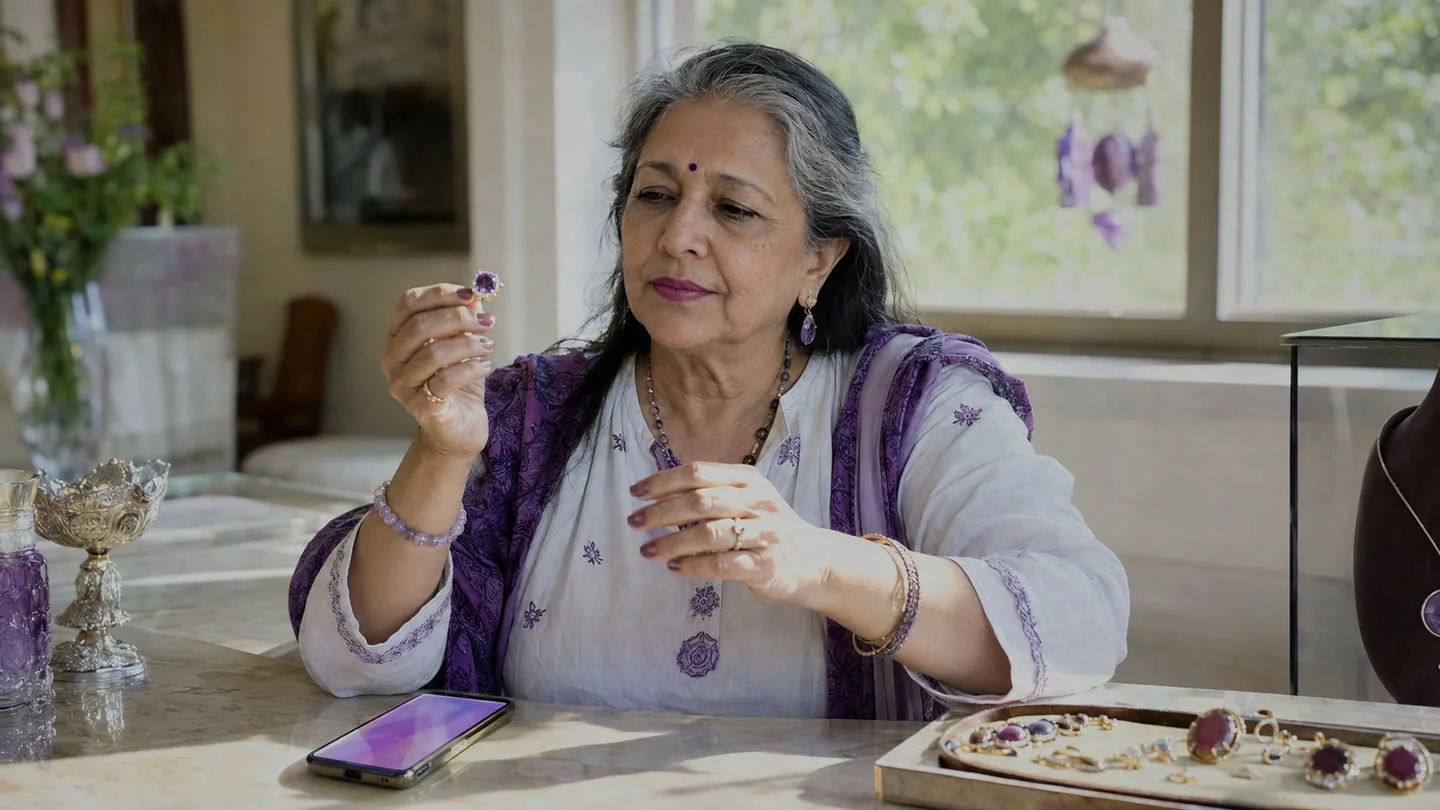
While "shape" describes a gemstone's outline, "cut" refers to how facets are arranged and proportioned to interact with light. The right cut transforms a rough stone into a brilliant gem, maximizing its beauty and value.
Cut vs. Shape: The Difference
These terms are often confused but mean different things:
- Shape: The outline (round, oval, square, etc.)
- Cut: The facet arrangement and quality (brilliant, step, etc.)
A round shape can have a brilliant cut, and an emerald shape typically has a step cut.
Brilliant Cut
Facets: 57-58 (classic); up to 144 in modified versions
Light Performance: Maximum brilliance and fire
Best For: Diamonds, sapphires, rubies, most transparent gems
How It Works
The brilliant cut features triangular and kite-shaped facets radiating from the center. This arrangement maximizes total internal reflection, bouncing light within the stone before it exits through the top (table), creating intense sparkle.
Characteristics
- Brilliance: White light reflection (sparkle)
- Fire: Light dispersion into spectral colors
- Scintillation: Flash pattern as stone moves
Variations
- Round Brilliant (standard)
- Modified Brilliant (oval, pear, marquise)
- Hearts and Arrows (super-ideal)
Step Cut
Facets: 50-58 (rectangular facets in parallel rows)
Light Performance: Elegant flashes, "hall of mirrors" effect
Best For: Emeralds, Asscher, high-clarity stones
How It Works
Step cuts feature rectangular facets arranged in parallel rows (steps) down the pavilion. Instead of sparkle, this creates long, elegant flashes of light.
Characteristics
- Sophisticated, understated elegance
- Showcases stone's clarity
- Flashes rather than sparkle
- Art Deco aesthetic
Variations
- Emerald Cut (rectangular with cropped corners)
- Asscher Cut (square step cut)
- Baguette (small rectangular)
- Carré (square without cropped corners)
Note: Step cuts reveal inclusions more easily than brilliant cuts, so high clarity is essential.
Mixed Cut
Facets: Variable
Light Performance: Combines brilliance and clarity showcase
Best For: Colored gemstones, modern designs
How It Works
Mixed cuts combine brilliant and step cutting techniques, typically with a brilliant-cut crown (top) and step-cut pavilion (bottom), or vice versa.
Advantages
- Maximizes color in colored stones
- Retains more carat weight
- Balances brilliance and clarity
Common Mixed Cuts
- Princess Cut
- Cushion (many variations are mixed)
- Radiant Cut
Cabochon Cut
Facets: None (smooth dome)
Light Performance: Shows phenomena like asterism, chatoyancy
Best For: Star sapphires, cat's eye, moonstone, opaque stones
How It Works
Cabochons are polished into a smooth, rounded dome without facets. This oldest cutting style is ideal for stones with special optical effects or those too soft/included for faceting.
Types of Cabochons
- High dome: Maximum height, emphasizes phenomena
- Low dome: Flatter profile
- Double cabochon: Domed on both sides
- Buff top: Cabochon crown with faceted pavilion
Best For
- Star rubies and sapphires (asterism)
- Cat's Eye chrysoberyl (chatoyancy)
- Moonstone (adularescence)
- Turquoise, lapis, jade (opaque stones)
Vedic Importance: Cat's Eye (Lehsunia) must be cabochon-cut to display its characteristic light band. Many traditional astrologers prefer cabochon pearls and corals.
Cut Quality Factors
For faceted gemstones, cut quality is evaluated by:
- Proportions: Depth percentage, table size, angles
- Symmetry: How precisely facets align
- Polish: Smoothness of facet surfaces
- Windowing: See-through areas (undesirable)
- Extinction: Dark areas (some is normal)
Ideal Cut Proportions (Round Diamond)
- Table: 54-57%
- Depth: 59-62.3%
- Crown angle: 34-35 degrees
- Pavilion angle: 40.6-41 degrees
Cutting Colored Gemstones
Unlike diamonds, colored gemstones are cut primarily to maximize color, not brilliance:
- Depth: Deeper cuts intensify pale colors
- Orientation: Stone is oriented to show best color
- Windowing: Slight windowing acceptable if color improves
- Weight retention: More important for expensive gems
Vedic Astrology Considerations
For Jyotish gemstones, cut quality matters but natural authenticity is paramount:
- Stone must be natural and untreated
- Minimum carat weight requirements must be met
- Stone must touch the skin
- Shape is less important than quality
- Cabochon required for Cat's Eye; preferred for some Pearls
Conclusion
Understanding gemstone cuts helps you appreciate the craftsmanship behind beautiful gems and make informed purchasing decisions. Whether you prefer the intense sparkle of a brilliant cut, the elegant flashes of a step cut, or the mysterious glow of a cabochon, the right cut brings out each stone's unique beauty.
For astrological purposes, focus first on natural quality and proper weight - cut style is secondary to a gemstone's intrinsic planetary energy.