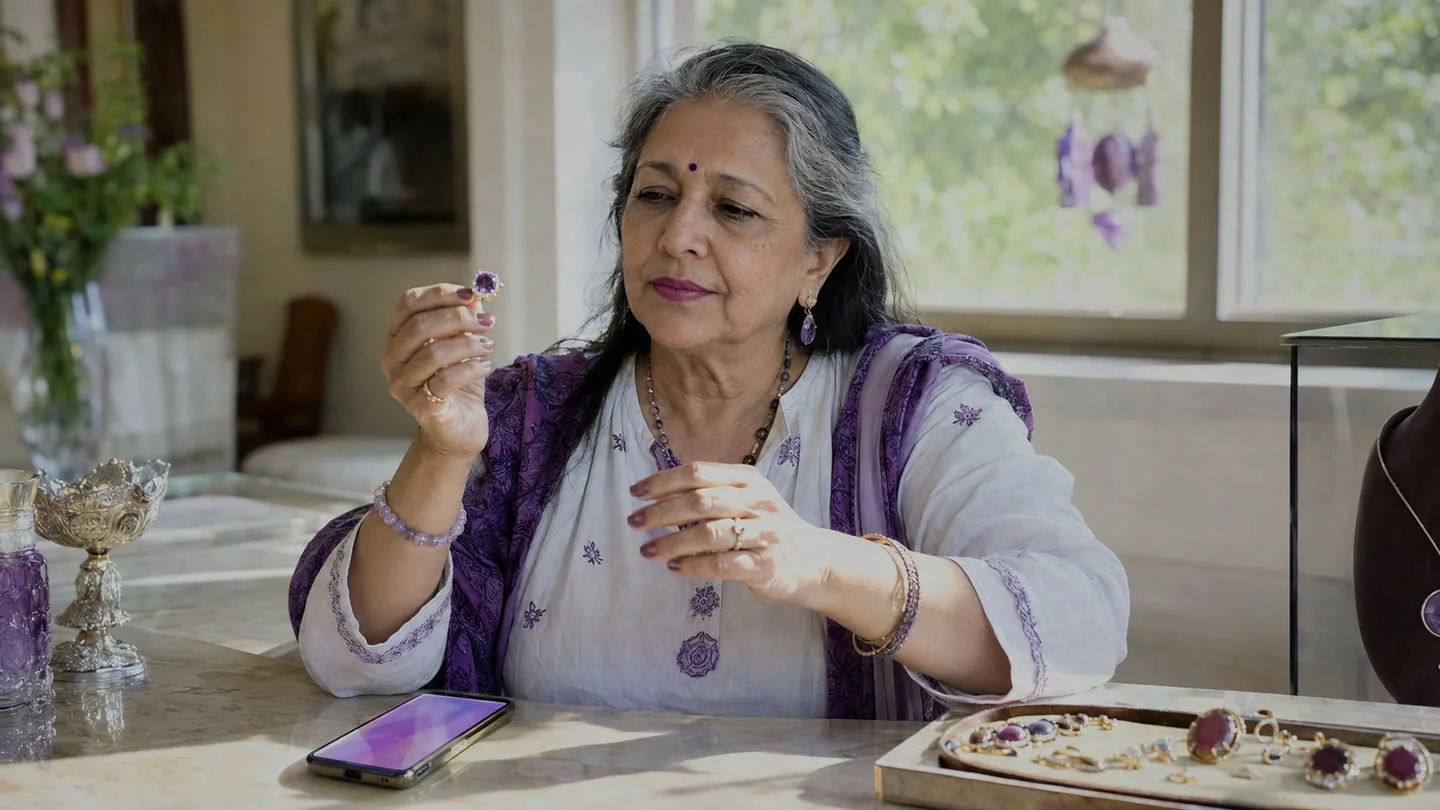
The shape of a gemstone is far more than an aesthetic choice. In Vedic astrology, different shapes are believed to channel planetary energies in unique ways, affecting how the stone interacts with its wearer. Understanding gemstone shapes helps you select stones that not only look beautiful but also align with your astrological needs and personal energy.
While traditional Jyotish texts don't prescribe specific shapes, centuries of gemological experience have associated certain shapes with particular qualities. Modern astrologers often consider shape alongside clarity, color, and carat weight when recommending stones for planetary remedies.
Oval Shape
Characteristics: Elongated ellipse with balanced proportions
Symbolism: Fertility, creativity, renewal, eternal cycles
Best For: Ruby, Yellow Sapphire, Blue Sapphire, Emerald
The oval shape is perhaps the most popular choice for astrological gemstones. Its elongated form maximizes the stone's apparent size while maintaining excellent light performance. The continuous curved edge symbolizes eternity and the cyclical nature of karma.
Astrological Benefits: Ovals are considered versatile and balanced, suitable for most planetary remedies. They're particularly favored for Jupiter stones (Yellow Sapphire) as the shape represents expansion and growth. The smooth, unbroken perimeter is said to create uninterrupted energy flow.
Practical Advantages: More affordable than round cuts of same carat weight, flattering finger appearance, fewer sharp corners to chip.
Round Brilliant
Characteristics: Circular with 57-58 facets for maximum brilliance
Symbolism: Completeness, unity, the Sun, wholeness
Best For: Ruby, Diamond, all precious gems
The round brilliant cut represents geometric perfection - the circle has no beginning or end, symbolizing eternity and the divine. This shape maximizes light return, creating the most sparkle of any cut.
Astrological Benefits: Round shapes are strongly associated with the Sun (Surya) and are considered ideal for Rubies. The perfect symmetry is said to balance all planetary influences. Some astrologers recommend round cuts when multiple planetary afflictions need addressing simultaneously.
Practical Advantages: Maximum brilliance and fire, timeless appearance, most expensive due to material loss during cutting (up to 50% of rough stone).
Cushion Cut
Characteristics: Square or rectangular with rounded corners, pillow-like appearance
Symbolism: Comfort, stability, emotional security, grounding
Best For: Blue Sapphire, Yellow Sapphire, Hessonite
The cushion cut combines the stability of angular shapes with the softness of curves. This antique cut style has been popular for centuries and offers excellent color saturation, making it ideal for colored gemstones.
Astrological Benefits: The grounding nature of the cushion cut makes it excellent for Saturn stones (Blue Sapphire). The softened corners are believed to temper Saturn's harsh energies while maintaining the discipline and structure represented by the underlying square form.
Practical Advantages: Excellent color display, vintage appeal, good value compared to round cuts, durable rounded corners.
Emerald Cut
Characteristics: Rectangular with stepped facets and cropped corners
Symbolism: Clarity, truth, intellectual precision, Mercury's logic
Best For: Emerald (obviously), Diamond, Aquamarine
Named after the gemstone it was designed for, the emerald cut features a "hall of mirrors" effect with its long, parallel facets. This cut prioritizes clarity over brilliance, creating a sophisticated, understated elegance.
Astrological Benefits: The emerald cut's emphasis on transparency makes it perfect for Mercury stones. The step-cut faceting is said to enhance mental clarity and communication. Some believe the rectangular shape focuses Mercury's intellectual energy like a laser.
Practical Advantages: Shows fewer inclusions than brilliant cuts, elegant appearance, larger face-up appearance for the carat weight, vintage sophistication.
Pear (Teardrop) Shape
Characteristics: One rounded end tapering to a point, like a drop of water
Symbolism: Emotions, intuition, the Moon, water element, cleansing
Best For: Pearl (as pendant), Moonstone, Diamond
The pear shape combines the brilliance of round cuts with an elegant pointed end. This dynamic shape creates a sense of movement and flow, reminiscent of a teardrop or dewdrop.
Astrological Benefits: The teardrop association connects this shape to the Moon (Chandra) and water element. Pear-shaped stones are believed to enhance emotional intelligence and intuition. The pointed end is said to direct energy outward, making this shape effective for releasing emotional blockages.
Practical Advantages: Elongating effect on fingers, unique appearance, good brilliance, versatile for pendants and rings.
Marquise (Navette) Shape
Characteristics: Football-shaped with pointed ends on both sides
Symbolism: Royal authority, Mars energy, ambition, action
Best For: Red Coral, Ruby, Diamond
Legend says Louis XV commissioned this cut to resemble the lips of the Marquise de Pompadour. The dramatic shape maximizes carat weight appearance and creates a bold, commanding presence.
Astrological Benefits: The pointed ends of the marquise are associated with Mars (Mangal) energy - aggressive, ambitious, and action-oriented. This shape is believed to enhance courage and assertiveness. The dual points symbolize the ability to both give and receive energy.
Practical Advantages: Appears larger than actual carat weight, elongates fingers, makes a bold statement, excellent for side stones.
Heart Shape
Characteristics: Modified pear shape with cleft at the top
Symbolism: Love, Venus, relationships, emotional healing
Best For: Diamond, Pink Sapphire, Rose Quartz
The heart shape is the ultimate symbol of love and romance. This challenging cut requires excellent craftsmanship to achieve proper symmetry.
Astrological Benefits: Strongly associated with Venus (Shukra), the planet of love, beauty, and relationships. Heart-shaped stones are recommended for enhancing marital harmony and attracting love. The shape is believed to open the heart chakra and heal emotional wounds.
Practical Advantages: Romantic symbolism, unique appearance, meaningful for gifts, best in larger sizes (1+ carat) where the shape is clearly visible.
Square (Princess) Cut
Characteristics: Square with pointed corners and brilliant-style faceting
Symbolism: Stability, structure, Saturn, foundation, discipline
Best For: Diamond, Blue Sapphire, Amethyst
The princess cut offers the brilliance of round cuts in a square shape. The sharp corners and clean lines create a modern, geometric aesthetic.
Astrological Benefits: The four equal sides represent stability and the four directions. This shape is associated with Saturn (Shani) and foundation-building. Square cuts are believed to enhance discipline, organization, and long-term planning abilities.
Practical Advantages: Modern appearance, good brilliance, efficient use of rough material, lower price than round brilliant.
Cabochon (Dome) Shape
Characteristics: Smooth, rounded dome with flat back, no facets
Symbolism: Protection, smoothing difficulties, ancient wisdom
Best For: Cat's Eye, Star Sapphire, Star Ruby, Moonstone, Coral, Pearl
The cabochon is the oldest gemstone shape, predating faceted cuts by millennia. This smooth, unfaceted form allows optical phenomena like chatoyancy (cat's eye effect) and asterism (star effect) to display properly.
Astrological Benefits: Cabochons are the traditional and preferred shape for several Navaratna gems. Cat's Eye Chrysoberyl for Ketu MUST be cut as cabochon to display its protective "eye." Coral and Pearl are naturally smooth. The dome shape is believed to evenly distribute planetary energy across the skin contact area.
Practical Advantages: Essential for phenomenal gems, traditional appearance, durable without fragile facet edges, often more affordable than faceted cuts.
Triangle (Trillion) Shape
Characteristics: Three-sided with either pointed or curved corners
Symbolism: Trinity, balance of three gunas, transformation
Best For: All colored gemstones, especially unique specimens
The triangle represents the number three, which holds profound significance across cultures. In Hindu philosophy, it represents the three gunas (sattva, rajas, tamas), the trimurthi (Brahma, Vishnu, Shiva), and past-present-future.
Astrological Benefits: Triangle shapes are believed to balance the three fundamental qualities of existence. This shape is associated with fire element and transformation. Some astrologers recommend trilliants for individuals seeking major life changes or spiritual transformation.
Practical Advantages: Unique appearance, excellent as accent stones, maximizes rough material, eye-catching modern look.
Traditional Shapes in Vedic Practice
Classical Jyotish texts mention gemstones but rarely specify shapes. Traditional Indian gem cutting often prioritized weight retention over brilliance, resulting in asymmetrical but heavy stones. Today's recommendations blend traditional wisdom with modern gemological knowledge:
Recommended Shapes by Planet
- Sun (Ruby): Round or oval - representing the solar disc
- Moon (Pearl): Round or baroque - natural pearl shapes
- Mars (Red Coral): Capsule/cylindrical or cabochon - traditional coral forms
- Mercury (Emerald): Emerald cut or oval - enhances clarity
- Jupiter (Yellow Sapphire): Oval or cushion - represents expansion
- Venus (Diamond): Round brilliant or oval - maximum brilliance for beauty planet
- Saturn (Blue Sapphire): Cushion or oval - softens Saturn's energy
- Rahu (Hessonite): Oval or cushion - traditional preference
- Ketu (Cat's Eye): Cabochon only - required for chatoyancy
How to Choose the Right Shape
When selecting a gemstone shape for astrological purposes, consider these factors:
1. Traditional Requirements
Some stones have shape requirements. Cat's Eye must be cabochon. Coral traditionally comes in cylindrical or cabochon form. Pearl is naturally round or baroque.
2. Planetary Association
Consider shapes that resonate with your target planet's energy. Round for Sun, teardrop for Moon, sharp points for Mars, geometric for Mercury, etc.
3. Personal Preference
You'll wear this stone regularly - choose a shape you genuinely like. Positive feelings toward your gemstone enhance its effectiveness.
4. Practical Considerations
Consider durability (avoid sharp points if you work with your hands), setting style (some shapes require specific settings), and budget (round brilliants cost more per carat).
5. Quality Over Shape
A well-cut stone of any shape will outperform a poorly cut stone in your "ideal" shape. Prioritize clarity, color, and overall quality over shape preferences.
Shape Effects on Energy Flow
Different practitioners have varying theories about how shape affects a gemstone's energetic properties:
- Curved shapes (oval, round) are believed to create smooth, continuous energy flow
- Pointed shapes (marquise, pear) may direct energy outward from the points
- Square shapes provide stable, grounded energy distribution
- Cabochons offer maximum skin contact and even energy distribution
- Faceted stones may amplify and project energy through light interaction
While these theories aren't scientifically proven, they represent accumulated observational wisdom from practitioners over generations.
Conclusion
Gemstone shape adds another dimension to the art of selecting astrological gems. While no single shape is universally "best," understanding the symbolism and characteristics of each cut helps you make informed decisions that align with your planetary needs and personal style.
Remember: the most important factors remain the stone's natural quality, proper identification, and correct wearing procedures. Shape is a secondary consideration that can enhance - but never replace - these fundamental requirements.
Learn about cutting styles and their technical aspects in our next lesson: Gemstone Cuts Explained.