The terms "precious" and "semi-precious" have been used for centuries to classify gemstones, but this distinction is increasingly seen as outdated and misleading by gemologists and jewelry professionals.
Traditional Classification
Historically, only four gemstones were classified as "precious":
- Diamond - The hardest natural substance
- Ruby - Red corundum
- Sapphire - Blue corundum (other colors too)
- Emerald - Green beryl
All other gemstones - including pearls, opals, aquamarine, amethyst, and hundreds more - were labeled "semi-precious."
Why the Distinction is Misleading
Price Doesn't Follow the Rule
Many "semi-precious" stones can be far more valuable than "precious" ones:
- Fine alexandrite can cost more per carat than diamond
- Top padparadscha sapphire exceeds most rubies
- Exceptional paraiba tourmaline rivals emeralds
- Natural pearl can exceed low-grade ruby
Rarity Doesn't Match
Some "semi-precious" stones are rarer than "precious" ones:
- Tanzanite is found only in one location
- Natural alexandrite is exceptionally rare
- Fine tsavorite garnet is rarer than emerald
Beauty is Subjective
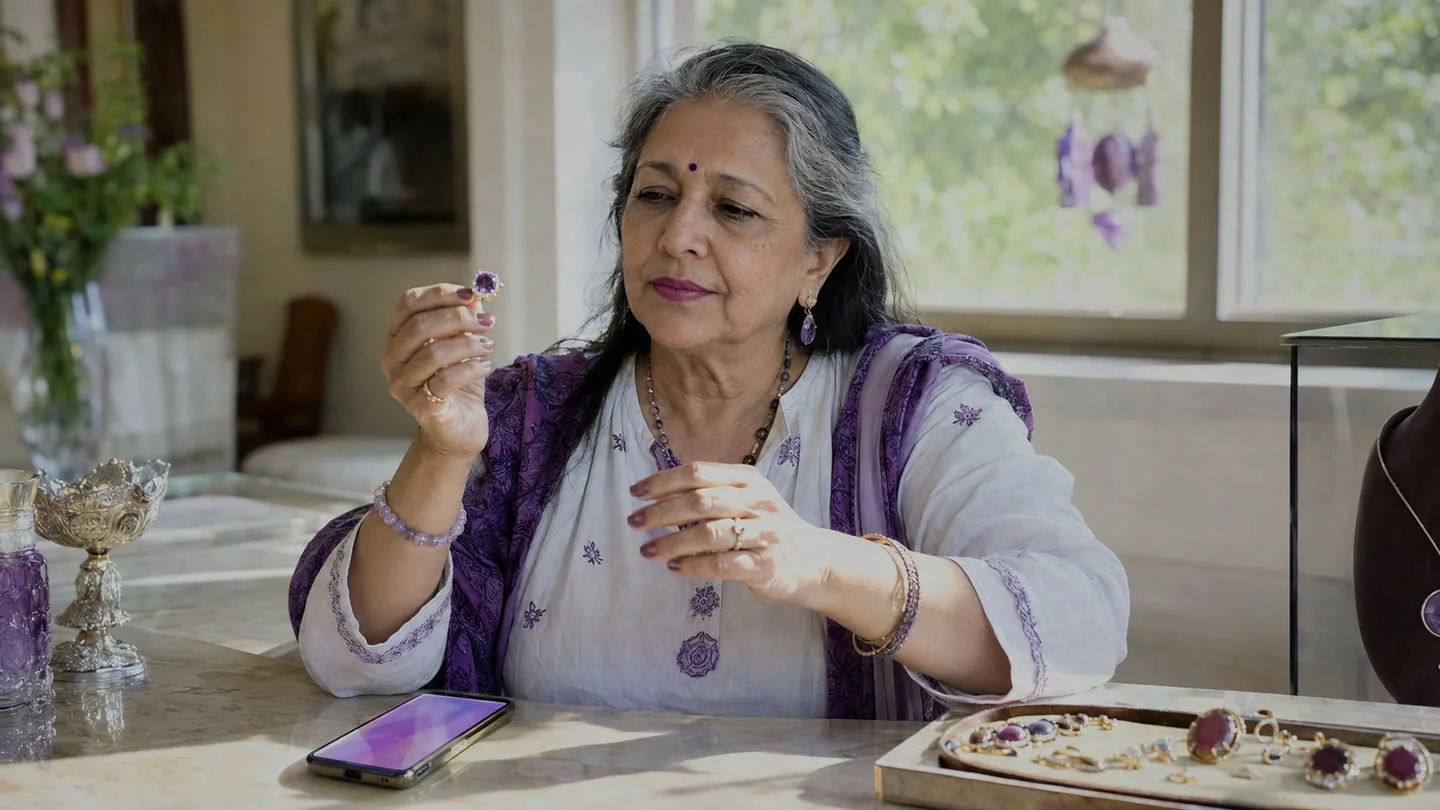
A fine amethyst can be more beautiful than a poor-quality ruby. Quality within each gemstone type varies enormously.
What Actually Determines Value
Gemstone value depends on:
- Quality: Color, clarity, cut, carat (the 4Cs)
- Rarity: How scarce the stone is
- Durability: Hardness and toughness
- Demand: Market desire for the stone
- Treatment status: Natural vs. enhanced
- Origin: Some locations command premiums
Modern Industry View
The gemological industry increasingly avoids these terms:
- GIA doesn't use "semi-precious" terminology
- Professional gemologists prefer specific names
- Some countries prohibit "semi-precious" in advertising
- Alternative term: "fine gems" for all quality stones
Vedic Astrology Perspective
Interestingly, Vedic astrology has never used this Western classification. The Navratna (nine gems) system values stones based on planetary associations, not arbitrary categories:
- Cat's Eye (Hessonite) and Coral are as important as Ruby
- Pearl holds equal status with Diamond
- Value is based on astrological effect, not market price
Each Navratna gemstone channels specific planetary energy, making the precious/semi-precious distinction irrelevant for astrological purposes.
Practical Advice
- Focus on quality, not category labels
- Judge each stone individually
- Consider your purpose (aesthetics, investment, astrology)
- Don't assume "precious" means better value
- A fine "semi-precious" stone beats a poor "precious" one
Conclusion
The precious vs. semi-precious distinction is a historical artifact that doesn't reflect modern understanding of gemstone value. Whether you're buying for beauty, investment, or astrological purposes, focus on individual stone quality rather than outdated categories.
Every gemstone has unique properties and potential value - judge each on its own merits, not arbitrary labels.