Mantra Guide: Navagraha Planetary Mantras
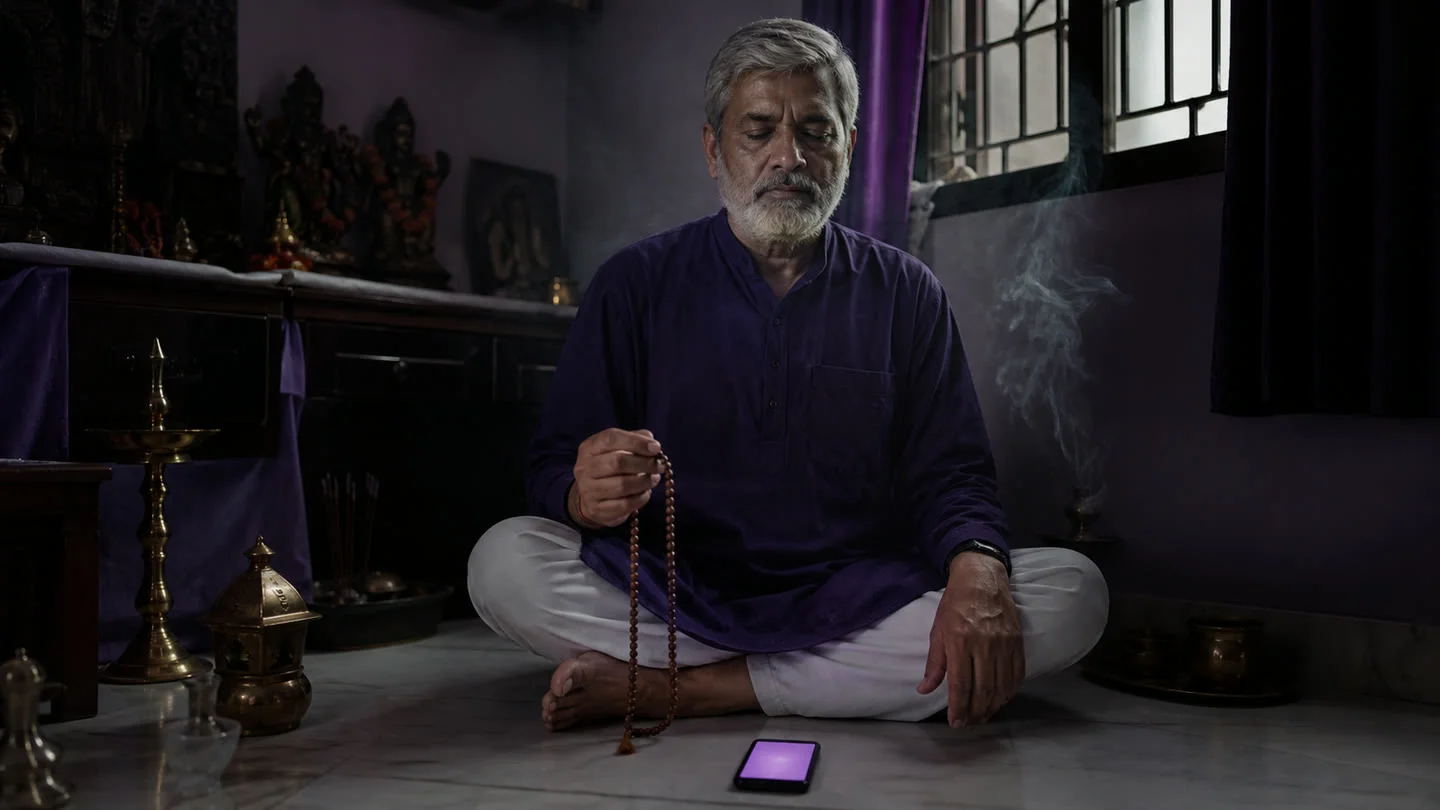
What this section covers
This section holds one mantra page for each of the nine grahas of Vedic astrology. Every page gives the Sanskrit text in Devanagari, a Roman transliteration you can read aloud, the plain meaning of the words, the beej (seed) form and the Gayatri form where one exists, plus the weekday, time of day, facing direction, japa count and offerings that tradition attaches to that planet.
It helps anyone who has been told to strengthen or pacify a planet, anyone passing through a hard period such as Sade Sati, a Manglik phase or a difficult mahadasha, and anyone who simply wants a short daily practice. Start with the graha that matches your need, learn the short namah mantra first, then move to the beej or Gayatri form once the sounds are steady.
Mantras of the Seven Weekday Grahas
Surya Mantra
Sunday at sunrise, facing east. For health, vitality and recognition.
Chandra Mantra
Monday night, facing north-west. For calm emotions and peace of mind.
Mangal Mantra
Tuesday at sunrise, facing south. For courage, property and Manglik Dosha.
Budh Mantra
Wednesday morning, facing north. For study, speech and business.
Guru Mantra
Thursday at sunrise, facing north-east. For wisdom, marriage and children.
Shukra Mantra
Friday, facing east. For love, art, comfort and wealth.
Shani Mantra
Saturday evening, facing west. For Sade Sati relief and steady work.
Mantras of the Two Shadow Grahas
Rahu and Ketu are the lunar nodes. They hold no physical body, so their mantras are chanted after dark and their remedies lean on donation and restraint rather than on strength.
Quick Reference: Day, Direction and Count
The beej mantra column shows the seed form of each graha mantra. Full text, meaning and the longer Gayatri form are on each planet page.
| Graha | Day | Direction | Short count | Beej mantra |
|---|---|---|---|---|
| Surya (Sun) | Sunday, sunrise | East | 7 or 21 | Om Hraam Hreem Hraum Sah Suryaya Namah |
| Chandra (Moon) | Monday, night | North-West | 11 or 27 | Om Shram Shreem Shraum Sah Chandraya Namah |
| Mangal (Mars) | Tuesday, sunrise | South | 7 or 21 | Om Kraam Kreem Kraum Sah Bhaumaya Namah |
| Budh (Mercury) | Wednesday, morning | North | 17 or 21 | Om Braam Breem Braum Sah Budhaya Namah |
| Guru (Jupiter) | Thursday, sunrise | North-East | 16 or 19 | Om Graam Greem Graum Sah Gurave Namah |
| Shukra (Venus) | Friday, morning | East | 16 or 20 | Om Draam Dreem Draum Sah Shukraya Namah |
| Shani (Saturn) | Saturday, evening | West | 23 | Om Praam Preem Praum Sah Shanaischaraya Namah |
| Rahu | Wednesday or Saturday, night | South-West | 18 | Om Bhraam Bhreem Bhraum Sah Rahave Namah |
| Ketu | Tuesday or Saturday, evening | South | 7 or 17 | Om Sraam Sreem Sraum Sah Ketave Namah |
A full mala of 108 repetitions can be used for any graha in place of the short count.
How to Use These Pages
- Find the graha that rules your concern, or the graha running in your current dasha or transit.
- Open its page and read the meaning before you chant, so the words carry sense and not only sound.
- Begin with the short namah form. Move to the beej or Gayatri form when the pronunciation is comfortable.
- Keep the same day, the same time and the same count. Regularity matters more than volume.
- Pair the japa with the donation listed on the page. Vedic remedy joins recitation with an act of giving.